Showing posts with label Chicago Film Festival. Show all posts

Friday, October 21, 2011

Chicago Film Festival Closing Ceremony Surprise! It's---"Margin Call"


The second-to-last night of the Chicago Film Festival traditionally offers a Surprise Film.  No one knows beforehand what the film will be. Speculation and excitement run rampant.  All you need to do to get in is wear a Festival T-shirt or sweatshirt.


Wednesday night was cold and damp, with fierce winds blowing the rain hard against your face and soaking your topcoat to an embarrassing degree.  An umbrella was no good against the gusts of 60mph or more.


That didn't keep true fans away.  When I arrived an hour before showtime, there was a contingent of almost 100 strong already, sitting in a snaky line in the lobby.  It felt like my days as a college residence hall director. 


As the time approached, everyone was abuzz with guesses as to what we would see.  "J.Edgar"?  "Rum Diary"?  "The Muppet Movie"?  The new Almodovar?    After a festival filled with riches from all over the world, with edgy and wonderful cinema to revel in, what would be the frosting on the cake?


We took our seats and got rowdy for group photos (ours should be posted on the Fest web site soon). The lights went down.  We held our breath....


Fade in to a helicopter shot of New York City...  The projectionist had no time to even frame the picture properly: the credits, which appeared on the bottom of the frame, were cut off!  That problem would plague the first 15 minutes of the movie.  Fortunately, the main title appeared dead center...and there was a strange, uncertain silence from the cineastes in my midst.  The film? "Margin Call". 


A relatively unfamiliar Hollywood product...  We were intrigued....Instead of excited applause, we all settled back to quietly check it out.....


*      *      *      *      *      *  

   
"Margin Call", the feature-film debut of writer-director J.C. Chandor, feels like it was made from a rough-draft of a screenplay that could have used a rewrite. 


Reportedly shot in just over two weeks on a tight budget, the film deserves some kudos for attempting to tell a human story of investment bankers who were seduced by easy money and created a global financial meltdown.  After the first fifteen minutes, I thought "Margin Call" was going to become some sort of "Die Hard" involving an idealistic corporate intern fighting the corruption of the evil rich.  Fortunately, the film moved in a quieter direction, and seemed to be making a sincere attempt to entertain and be topical.


The problem, for me, is that this movie is nothing more than two hours of guys (and Demi Moore) in suits, talking, about things that are both impenetrable (they need, literally, a rocket scientist to explain the trader train-wreck about to occur); and so familiar that we become impatient for some new twist, some new light that never comes. 


 Thus "Margin Call" is oddly contradictory.  It examines an issue that, today, has people taking to the streets in anger; and yet feels completely cut off from the real-life implications of its subject matter.  (Viewers will have been more stirred to angry action, and deeper understanding, from "Capitalism: A Love Story" or "Inside Job").  Instead, "Margin Call" seeks to generate some weird sympathy for these individuals who somehow had no idea what was about to happen, and asks us to accept them as victims.  Characters spend a lot of time looking at alarming stuff on myriad computer screens, but we viewers are neither invited to look at, nor to begin to understand, what's on them.


It all goes back to the script.  The film opens with a veteran employee (Stanley Tucci) getting fired, being offered a severance, and losing his office privileges and company cell phone.  He is ordered to clear out immediately. A "Soprano"-sized bodyguard is assigned to stand watch outside of Tucci's office and accompany him to the elevator, to be sure he does not steal any company secrets. And then, in the elevator right in front of this "escort", Tucci hands a flash drive to a young analyst he has mentored (the darkly handsome, newly "out" Zachary Quinto), tells him to have a look, and to be careful.... 

Which is exactly what the beefy bodyguard was assigned to prevent!!....and no comment is made.

At this point, all credibility collapses, and the film never really recovers.  Soon, the ever-loyal Quinto takes a look at his mentor's work, finds the missing piece that Tucci was about to discover before he was sacked, and his rocket-science training allows him to see what no one else was able to see (or having seen, admit to): that the company, like much of the world, was on the brink of financial collapse.  It occurs to a viewer that the massive layoffs, staged at the film's outset, had nothing to do with the company going under, since, at that moment, no one realized anything bad was happening.... So why not re-write Tucci's character as a new retiree, and skip the false intrigue?

"Margin Call" takes place in a 24-hour period, in one office building.  It's like a sedated version of "Glengarry Glen Ross" with today's headlines to give it legitimacy.  This movie, come to think of it, might have more energy if it were performed on a stage.

Lacking any filmic excitement, we are drawn in by a capable and excellent cast, who all perform with conviction, even though some rather lazy dialog often has a variety of characters using the same phrasing,  for no apparent comic or dramatic purpose.  Because of the actors (and Demi Moore), I will admit that I was, at least for two hours, held and entertained.

The aforementioned Quinto doubles here as one of the producers of the film.  He plays a likable character whose role too quickly diminishes into a supporting one (a gesture of modesty, perhaps?)  His cool, determined gaze and luxurious, magic-marker eyebrows make for some intense and satisfying closeups.  He also has, far and away, the best haircut of the entire cast...I have rarely seen so many glamorous stars look so sloppy in a film about high-rolling professionals.


Kevin Spacey, as the head of the division, looked alarmingly different in appearance.  To say his character is deglamorized is an understatement; at first I thought he was Gene Hackman.  Nevertheless, he works small miracles with this part, and should have been given a better-developed back-story. The script cheats Spacey out of what could have been an incredibly moving moment in the film.

Jeremy Irons chews up the scenery as the Big Boss, who helicopters in for the night, to gather enough information to put the final nail in the coffin of his troubled company, all for his enrichment. 

Paul Bettany is almost too treacherous, chewing Nicorette gum and seeming a lot more mysterious than he is. Penn Badgley is a naive innocent, a nerd who wears white socks with his suit, and pulls off a loyal frat-brother puppy-dog demeanor--I liked Badgely a lot. Simon Baker and Demi Moore are fine in bookend roles, as high-level investors who must find a quick way out of a jam, manipulating everyone like expert chess players.  Moore is surprisingly good, especially in her climactic dialogue with Irons.

Perhaps the most unfortunate failing of "Margin Call" is its inability to move an audience.  Spacey's character has, as a framing device, a poignant concern about his dog, who is about to die.  Is this a two-cent way of eliciting sympathy?  As a sucker for all things dog, and as one whose tears flow freely whenever a movie character has to bury a departed pet, I had no emotional reaction to this at all.  It all seemed so wrong, and so manipulative, in a film as steely-cold as "Margin Call".

Tuesday, October 18, 2011

Chicago FilmFest Mini Reviews: "Silver Cliff", "Larger Than Life", and an Audience Fave!

What Love May Bring

I was really into it, having fun and feeling like this was where I belonged. Two screenings back-to-back, with ten minutes in between to take a bathroom break and dash across to the opposite end of the multiplex, was the highlight of this past Saturday.


Before I review "Silver Cliff" (a Brazilian drama) and "Carol Channing: Larger Than Life" (A Documentary from the US), I must mention one of the Best of the Fest winners (I'm very excited)....


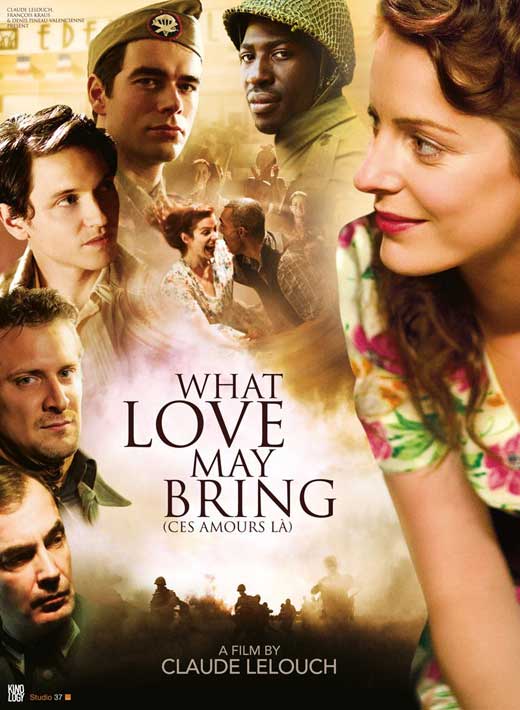
Chosen as one of the two Audience Favorites was Claude Lelouch's epic poem to the cinema titled "What Love May Bring" (photo above, and reviewed here last week).  I was excited to know that, out of the 150-plus films screened at the Festival,  and of the four that I was able to get to, I was right there among an appreciative crowd that was as moved and delighted as I was.

That night, the Event Schedule showed that the film was sold out. After making an inquiry, we were told that a few tickets might be available after all.  Timing and personal preference, and a little bit of scrambling, made it possible to be a part of what would turn out to be one of the essential events of the entire two weeks.

*     *     *     *     *     *

"SILVER CLIFF"
The dashing producer (Rodrigo Teixeira) of the Brazilian film "Silver Cliff" introduced the festival screening, and explained that the movie is based on the lyrics of an old classic pop song called "Eye to Eye", which is played at the end of the film. The song is about getting through heartbreak and renewing your life after love goes away (sort of the same sentiment as "I Will Survive", in dreamy Portuguese.) 

The movie is an almost plotless tone poem about the sudden and unexplained disintegration of a marriage.  After having sex with his wife one morning, Violeta's distracted husband goes on a business trip. From the road, he sends her a voice message saying he doesn't love her any more, and is leaving her and their teenage son.  Devastated, she tries to go after him, and winds up wandering the streets of Rio de Janeiro that night, where she meets a little girl and her handsome young father.  After spending time together, they part company at daybreak, and their fates are left to our imagination, as the song suggests there is hope.

The film at first drew me in with its strong visuals, its attention to textures and creative use of framing of the characters, keeping backgrounds out of focus to suggest the alienation and entrapment of its characters in a mundane existence.  Alessandra Negrini, as Violeta, must carry the film in closeup, with her outpouring of confusion and emotion without the benefit of dialogue or much of anything to to.

What began as an intriguing visualization of the grief and confusion of life's tragic turning points eventually becomes tedious. The viewer feels stranded, watching protracted tracking shots of Violeta wandering and weeping.  One is left to notice meaningless details, like the sloppy paint job in the cheap hotel where she checks in that night, or the virtuoso camerawork in the bar sequence where Violeta dances alone to "Maniac."  The virtuosity for its own sake frustrates the viewer from learning anything more about Violeta, what might have happened, or what she will do next.

"Silver Cliff" is a nicely-produced, nice looking film, that nevertheless exemplifies the common independent-filmmaker impulse to create something out of a vague yearning, a wish to visualize an emotional state, but finally having little of lasting value to say.

*      *      *      *      *      *      *

"CAROL CHANNING: LARGER THAN LIFE"
"Carol Channing: Larger Than Life" is an explosively entertaining, fast-moving film about one of the treasures of the American stage.  Contemporary viewers may not know or remember Carol Channing, and may find her irrelevant.  This film sets out to disprove that idea!

Best known for her classic Broadway roles in "Gentlemen Prefer Blondes" and "Hello Dolly", Channing had a life filled with hard work, inspiration, and a generous view of the world.

The film is an expert compilation of current interviews with Channing, who serves as the film's "narrator"; on-screen commentaries from superstars like Betty Garrett, Lily Tomlin, Debbie Reynolds, Bob Mackie, Chita Rivera, Jerry Herman, JoAnne Worley (Channing's "Dolly" stand-in, who never got a chance to take the stage), Barbara Walters and many others; vintage photographs from Channing's childhood and early career, as well as old clips from TV interviews, variety programs and talk shows, commercials, and her Oscar-nominated turn in "Thoroughly Modern Millie". 

Woven into this gorgeous movie tapestry are clips from a current show that has Channing, at age 90, rehearsing with many of the guys from the chorus of her "Hello Dolly" revivals.  Most poignant is the revelation of her eventual marriage to the boy she grew up with, and loved for over 70 years, through the hardships of her own oppressive marriage, the challenges and heartbreaks of the road, and the excitement of her singular show-biz life.

The crowd where I screened this movie loved the surprising and hilarious anecdotes about her first movie kiss (with Clint Eastwood!), her thoughts on the movie version of "Hello Dolly" with Barbra Streisand, and many, many others.  I was moved by stories of Channing's compassion, her concern for a fellow cast member with AIDS, and her deep understanding of the pain of racism through her associations with Ethel Waters and Louis Armstrong.  It is even thought that Channing herself had a black ancestor.

This is a terrific film for show-business buffs, Broadway followers, and cultural nostalgists.  Director Dori Beirnstein (who appeared after the screening in Chicago) has done an astounding job of assembling an unbelievable amount of material into a frothy, energetic and informative movie.  Channing was a great subject, too, and from all appearances one of the nicest celebrities imaginable, very cooperative and a good sport. 

It is sometimes hard to evaluate a film about a charismatic subject and separate the subject from the quality of the filmmaking.  Here, it is a perfect marriage.  "Carol Channing: Larger Than Life" held me spellbound, smiling throughout, and choking back tears frequently. I must study this film for the skill of it's editing, too.  I loved the sequence in which Channing explained how "Before The Parade passes By" was written for "Hello Dolly", and what the song means. Crosscutting between four different interviews in rapid succession, Beirnstien tells a great story with comical subtle differences between the recollections of her subjects.

Channing represents to me a generation that we will soon lose forever, people like Mark's mother and my parents, and that except for the love and skill of great filmmakers, or the devoted preservation of lore by their loving families, their stories may disappear with them.  I recommend this film very highly indeed.

See it for no other reason than that people like Carol Channing, Louis Armstrong, Jerry Herman, Gower and Marge Champion, and others like them, will be remembered. 

And by their example, to remain encouraged to keep trying while there is still a chance....The words to this song have never been more inspiring....

Before the parade passes by
I've gotta go and taste Saturday's high life
Before the parade passes by
I've gotta get some life back into my life
I'm ready to move out in front
I've had enough of just passing by life
With the rest of them
With the best of them
I can hold my head up high
For I've got a goal again
I've got a drive again
I wanna feel my heart coming alive again
Before the parade passes by

Monday, October 17, 2011

Coming Soon: Two More From The Fest


Tomorrow, mini-reviews of two more from the Chicago Film Festival:


A mood piece from Brazil,  "The Silver Cliff":


And a dynamite documentary about a show-business icon:


I will also attempt to attend Wednesday night's Surprise Movie. It is a tradition of the Festival,  No one knows what will be shown until the lights go down.  People I've talked to are guessing "J.Edgar", "The Muppet Movie", or "Rum Diary".  Admission is free; but you have to wear a Festival T-shirt or sweatshirt to get in.

Monday, October 10, 2011

Chicago Film Festival: Two From France


My first trip to The Chicago Film Festival last weekend aroused my primal excitement for film...I re-discovered the pure love for the motion picture that I first felt in my adolescence. 


The AMC River East 21, right in the heart of Chicago's Gold Coast and the Magnificent Mile, provided a perfect home and showcase for the entire Film Festival, under one roof.  If I had the time and resources, I could have reveled in as many as five films. 


I did manage to attend two screenings, in between meeting staff and volunteers, walking in unseasonably warm sunshine all the way to Navy Pier, snapping photos of the light on the lakefront, and cooling off in the peaceful formality of a small art gallery.


And now, mini-reviews of the two screenings I attended, both from France: "American Translation", and "What Love May Bring."

*       *       *       *       *       *        *


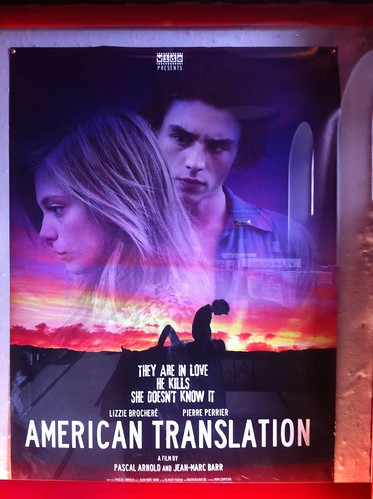
"American Translation", filmed in Paris and the surrounding countryside by Pascal Arnold and Jean-Marc Barr, keeps a viewer off-balance.  The script, by Arnold, takes an erotic story of young lovers and introduces dangerous material about murder and addiction and the pleasures of the sordid.  It's a slice-of-life psychodrama that builds a good amount of tension in its first two thirds, before losing its focus in the final scenes, and coming to sudden conclusion that resolves none of the psychological issues it begins to explore.

Still, it works as a seething romance between Aurore, an aimless and privileged girl of French-American parents, and Chris, an illiterate, darkly attractive cad with a taste for strangling young male prostitutes.  After they meet by chance in a hotel restroom and agree to stay together, Aurore becomes helplessly intrigued and enamored of this walking time bomb, who nevertheless opens up to her and reveals everything. 

The film takes a blackly comic and disturbing turn as, instead of fleeing in fear from Chris, Aurore becomes fascinated, drawn in, and agrees to participate in Chris' criminal scenarios.

Lizzie Brochere as Aurore succeeds in the tricky task of convincing the viewer of her outright addiction to this handsome criminal.  As Chris, Pierre Perrier is charming and frightening, in a performance as sensual as anything I have seen on screen in years.  There is real chemistry between the two, a natural rawness  They exude a tragic beauty; I don't think the actors even wore makeup.

The movie subverts an American romantic notions about European country idylls, using jump cuts and techno-pop in otherwise tranquil road scenes as the two lovers travel in their van looking for new victims.  There are long stretches of anticipatory dread with nothing but ambient city noise heard outside a window, or natural sounds during a victim's final moments.  Sometimes, Chris and Aurore appear as innocents with no control over their dark impulses.  There is an unexplainable connection between them; they even prevail on a priest in Chris' home town to "marry" them, after which they have wedding bands tattooed on their ring-fingers.

One thing that attracted American audiences in the 1950's and '60's to European cinema was the frank and matter-of-fact treatment of sexuality and the human body.  It appears that this free attitude toward sexuality still holds.  There is enough nudity in "American Translation" to scandalize a mainstream American audience.  Considering the violent natures and activities of the characters, depictions of violence are kept to a minimum, and what is shown is not explicit.  There is something perversely refreshing about a film about young serial killers that prefers female breasts and male genitalia to blood and gore.  There is virtually none of the latter in this film.

For lovers of vintage art-house cinema, "American Translation" can be described as an oddly winning blend of Terrence Malick's "Badlands" and Bertolucci's "Last Tango in Paris", with the menacing undercurrent of "Henry, Portrait of a Serial Killer."  If you like edgy filmmaking, how can you go wrong?


*      *      *      *      *      *      *


"What Love May Bring" demonstrates the possibility of crafting a deeply personal film on a grand, epic scale.  Veteran Director Claude Lelouch (Oscar-winner for "A Man and a Woman", 1966) has given us his 47th film, a love poem to the cinema, and a tapestry of five stories told in a single narrative, all of them true. 


Lelouch tells these stories in the style of the movies he loved as a child.  So, his WWII tales of Nazi intrigue, ill-fated romance, resistance, cabaret singers, nightclub dancers, treacherous lovers, and a little Jewish boy in hiding, take on the style of melodrama, musical comedy, battle epic, and  silent film.  The movies,  and their partner, music, are the substance of "What Love May Bring".

It is a lovely film, a feast of sorts. While it can be seen as self-indulgent, I accepted it as Lelouch's expression of gratitude for the art and the industry that sustained him, and a "thank you" to those before his camera and behind it for almost 50 years.


The plot is convoluted and would take too much time to recount it all here.  Much of it is fanciful and gruesome in equal measure, running the gamut from musical fantasy to wartime realism. It attempts to contain the sweep of history, beginning with a WWI newsreel filmmaker, his widow, and his orphaned son. The son grows up to survive the death camps, becomes a musician, and then a lawyer. 

The stories are told in flashback as the lawyer defends in court the central character, a young woman who is charged with murdering her husband, who in turn may have shot his army buddy over her.  She hides a Jewish friend's son in her father's cinema every day.  The backstories involve the woman's affair with a Nazi Officer to save her father, a projectionist, from the firing squad, and the origin of her husband's fortune, won by his grandfather (a Native American) in a land-race. The film wants to embrace all of this history, stylized to the movies that filtered the world for the character who emerges as the rightful narrator.


To keep up with the plotlines and characters is exhilarating and a bit exhausting, but finally rewarding, as it becomes clear that Lelouch is celebrating an art form that had saved his life and became a life's passion.  By the time we are looking at a montage of shots, the faces from  Lelouch's previous films, we come to realize that the Jewish boy hiding from Nazis every day in the movie theater is Lelouch himself.  I was terribly moved by this realization, as the images and the music washed over me.  The music, by the way, is by long-time collaborator Francis Lai ("Love Story").


Sure, it is sentimental. But I think Lelouch has a right to feel emotional, and to want to enthusiastically share his love of the cinema with all of us, as well as his family, who all carry the mantle of the performing arts.


Lelouch became friends with Chicago Film Festival founder Michael Kutza back during Kutza's college days when he discovered Lelouch's liberating style of filmmaking.  The screening was followed by a wonderful Q & A with Lelouch afterward.  Those of us who attended felt the electricity of a magical film experience, presided over by its creator.


Note: IMDB lists this film under the title "What War may Bring".  That certainly lends the whole film a different kind of gravity. Not sure when, or why, the title changed.


Sunday, October 9, 2011

Coming: The Chicago Film Fest; "50/50"and "Weekend"--Sunday Journal #2

American Translation - © TOLODA/LCJ PRODUCTIONS/SAMA PRODUCTIONS 2011 -

Your Chicago Correspondent will have a report on the beginning of the Chicago Film Festival  Saturday, we spent all day in the City, refugees from the quiet, sterile suburbs, and immersed ourselves in movies, chaos, gorgeous weather and lakefront delicacies.  We spent hours in darkened screening rooms with sexy serial killers; World War II romance and melodrama, music and nostalgia; and the iconic French Director, Claude Lelouch (and his darkly handsome son.)

Director Claude Lelouch and son Sachka attend the Silver Hugo Award ceremony during the 47th Chicago International film festival at the AMC River East 21 movie theater on October 8, 2011 in Chicago, Illinois.


Also this week, reviews of two non-festival films now playing: the "cancer-comedy" "50-50" which I enjoyed; and the gay love story "Weekend" which left me wanting.


Finally, a few musings on the state of the world left behind by Steve Jobs.


Hope to see you here this week!

Thursday, October 6, 2011

Chicago Film Festival: Opening Weekend

Here's a peek at eight of the films that have me excited about the Chicago Film Festival's opening weekend.  There are about a dozen movies I want to see; realistically, I might get to 2 or 3.  Reviews will follow, naturally.

I think I will become a volunteer with the Festival next year.  My dream is to take off for the entire two weeks, stay at a hotel in "Festival Village", and go to movies from morning to night, seven days a week, for the whole two weeks!

Many of the titles are already on the verge of selling out, or are on a "standby" (or Rush Ticket) basis.  Which means I may miss a few of these this time, but will certainly look for them in general release, at the few Art Houses we have left, or when they are released on DVD.

More titles as the next two weeks unfold: (click on the titles for more information on the films)

From One Film to Another  From One Film to Another

Original Title: D'un film à l'autre
Director: Claude Lelouch
France
French with subtitles
104 min
Special Presentation
Docufest

Synopsis:
The irrepressible, enigmatic outlaw of the Nouvelle Vague, Claude Lelouche, takes the viewer on an intimate cinematic tour of his prolific career. Turning the camera on himself, the director of A Man and A Woman bares his soul as he frankly confronts the lessons of failure and the spoils of success.


The Screen Illusion The Screen Illusion

Original Title: L’illusion comique
Director: Mathieu Amalric
France
French with subtitles
77 min
World Cinema

Synopsis:
In this contemporary adaptation of Pierre Corneille’s brilliant, eponymous 17th century play, the enigmatic Alcandre is now a hotel concierge who uses the myriad in-house high-tech security cameras to show worried father Pridamant the whereabouts and travails of his son, Clindor. As Pridamant witnesses the conflicting romances involving his estranged son, Corneille’s modernist meta-narrative is transposed to contemporary Paris, underscoring the ambiguous nature of love, wealth and desire in an age of consumerism.


Like Crazy 

Like Crazy

Director: Drake Doremus
USA
88 min
Special Presentation

Synopsis:
A love story is both a physical and emotional tale - one that can be deeply personal and heartbreaking for an audience to experience. When a British college student (Felicity Jones) falls for her American classmate, (Anton Yelchin), they embark on a passionate and life-changing journey to be separated when she violates the terms of her visa. Like Crazy explores how a couple faces the real challenges of being together and of being apart.


Habemus Papam (We Have A Pope)

Habemus Papam (We Have A Pope)

Original Title: Habemus Papam
Director: Nanni Moretti
Italy
Italian with subtitles
102 min
Special Presentation

Synopsis:
What would happen if the Pope got cold feet? Multi-award-winning Italian master comic, actor and director Nanni Moretti’s comically poignant We Have a Pope, which finds newly elected Cardinal Melville (the legendary French actor Michel Piccoli) petrified by the idea of taking up the position. As the Cardinal agonizes over his ability to dispense religious and moral leadership, he sends the Vatican into a tailspin as they try to control their worst ecclesiastical and PR nightmare in this critically acclaimed Cannes Film Festival favorite.


What Love May Bring

What Love May Bring

Original Title: Ces amours-l
Director: Claude Lelouch (See "From One Film to Another" above...the Documentary about Claude Lelouch)
France
French with subtitles
120 min
Special Presentation

Synopsis:
The 43rd film from Academy Award®-winning director and French New Wave maverick Claude Lelouch (A Man and a Woman) elicits a vision that is as potent as ever. Driven by a spirited will, the turbulent life of Ilva Lemoine, from her delight-filled childhood through the Great War, the French Resistance, liberation, and memories of soldiers loved and lost, is recounted in this spectacular epic drama.


The Kid with a Bike

The Kid with a Bike

Original Title: Le gamin au vélo
Director: Jean-Pierre and Luc Dardenne
Belgium
French with subtitles
87 min
Special Presentation

Synopsis:
11-year-old Cyril's only connection to his father, who left him in a children's home, is his bike. Desperately trying to retrieve his bike and reunite with his father, the kid is charged with confusion and anger. When local hairdresser Samantha agrees to foster Cyril on the weekends, she finds herself battling his self-destructive tendencies. Awarded the Grand Prix at this year's Cannes Film Festival, this tale of redemptive love bares the Dardennes’ evocative signature style.


Take Me Home

Take Me Home

Director: Sam Jaeger
USA
97 min
World Cinema

Synopsis:
Thom (Sam Jaeger, NBC’S Parenthood) just can’t win. After losing a job offer and getting evicted, he decides to buckle up as an illegal New York City cab driver. When he picks up Claire (Amber Jaeger), they embark on a trip neither one anticipated. This comedy finds solace in the back seat of a cab, the landscape of the USA, and even in a complete stranger. This classic road movie shows how a little cross-country drive can lead you to a different exit


American Translation

American Translation

Director: Pascal Arnold and Jean-Marc Barr
France
English, French with subtitles
109 min
OUTrageous
World Cinema

Synopsis:
Why is it always the cute ones who harbor the deep dark secrets? When Aurore, the daughter of a wealthy American, falls for sexy Frenchman Chris, she has no idea what adventure lies ahead. Escaping the doldrums of life in the city, the two set out on a road trip with some unexpected, unsavory detours. A thrilling blend of passionate devotion and degeneracy, this French Natural Born Killers asks how far you would go for love

Saturday, September 24, 2011

Coming Soon: Chicago Film Festival


New York. Toronto. Venice. Sundance. Cannes.  Move over! 

This year's 47th Chicago International Film Festival promises to be one of the most exciting two weeks of film exhibition the city..and the world...will see this year.

I just spent the last two hours browsing the awesome Festival web site, and marveling at this year's offerings. Founder and Artistic Director Michael Kutza deserves high praise for arranging a world-class "orgy for movie-lovers" (to quote Pauline Kael in her review of Robert Altman's "Nashville").

In the weeks leading up to and during the festival (October 6-20) I will offer reflections on upcoming films, a few reviews (I hope!), and a look back at the Festival's remarkable history.

I am so excited to share this with all of you...especially if you are not yet familiar with this event.

Movie lovers from Chicago recognize the evocative logo seen scrolling above, a pastiche of the eyes of silent film stars Theda Bara, Pola Negri and Mae Murray.  Both Charlie Chaplin and Liza Minnelli each believed that this logo had been made from their own cinematic likenesses!

Did you know that the Chicago Film Festival, now in its 47th year, is America's oldest competitive Film Festival?  Here's a snippet from the web page that relates the History of the Festival:


The Festival was started in 1964 by filmmaker and graphic artist Michael Kutza to provide an alternative to the commercial Hollywood movies that dominated the city’s theaters. The Festival opened in 1965 at the Carnegie Theater, where King Vidor, Bette Davis, and Stanley Kramer were honored for their contributions to American cinema. Since then, the Festival has grown to become a world-renowned annual event. The Festival is dedicated to fostering better understanding between cultures and to making a positive contribution to the art form of the moving image.

THIS YEAR'S HIGHLIGHTS include appearances by Director Simon Curtis and Screenwriter Adrian Hodges (after a screening of their film "My Week With Marilyn" with Michelle Williams and Kenneth Branagh); conversations with actor John C. Reilly and superstar Cinematographer Haskell Wexler;

AND THE MOVIES!! from countries like Norway and Cuba, Argentina and Hong Kong, Sweden and Japan...just for STARTERS...and more.

Check 'em out!!

Some of the Special Screenings of the Fest include David Cronenberg's Freud-Jung Melodrama "A Dangerous Method"; Ralph Fiennes' "Coriolanus";  a Documentary about French Director Claude Lelouch ("A Man and a Woman") and his latest, his 43rd film "What Love May Bring"; the new Italian comedy "Habemus Papam (We Have a Pope)"  Tilda Swinton in the film version of Lionel Shriver's award-winning novel "We Need to Talk About Kevin";  Anton Yelchin in the romantic Drama "Like Crazy"; Lars von Trier's intriguing "Melancholia", with Kirstin Dunst in her Cannes-Award-winning role; "Martha Marcy May Marlene", the story of a girl who escapes a cult  lead by John Hawkes; Werner Herzog's Documentary about death-row inmate Michael Perry "Into the Abyss"; and the highly anticipated valentine to silent cinema, France's "The Artist".

Stay tuned!