Wednesday, February 16, 2011

What Does Oscar Love? And a Mere Eleven Percent--A Wednesday Journal


I occasionally read the Arizona Republic's film critic Bill Goodykoontz, even after leaving my home in Arizona tweny years ago (to return to balmy Chicago).  He doesn't always please me; he tries too hard to be "relevant", may even be a little pandering at times.  But he writes well, and at least it's fun to disagree with him.


In a recent article about the upcoming Oscar Race (Feb. 16) he predicts a Best Picture win for "The King's Speech" with a certain backhanded compliment that I have heard too often in connection with this film's Oscar hopes:
"Will win: 'The King's Speech.' It's everything Oscar loves - an inspirational period piece with English accents that involves World War II."
This is a sentiment expressed by many who were caught off-guard by the film's sudden enthusiastic reception within the industry, calling to question the lockstep consensus from the critical community's bandwagon.


What Goodykoontz says may have been true in the 1960's when Oscar handed a string of awards to inspirational British films like "My Fair Lady", "Sound of Music", "Tom Jones" (not really inspiring but fun), and "A Man for All Seasons"; or heavier fare with English accents, like "Lawrence of Arabia" (British and cerebral) and "Oliver!" (British, but too dark to really inspire).


In fact, the LAST time Oscar's Best Picture met all of  Goodykoont's Oscar-loving ingredients, was 45 years ago in 1965 with "The Sound of Music": English accents, inspirational, period piece, WWII. 


Sure, there were British period pieces since then ("Chariots of Fire",  inspirational but the wrong war) "Gandhi" (ditto), "The English Patient" (a British WW-II period-piece, with Colin Firth to boot, but no one's idea of uplift) and "Shakespeare in Love" (lots of fun, and AGAIN Colin Firth, but much too early for the Great War).  For the English accents and the period design, toss in "Titanic" and "Lord of the Rings: The Return of the King".


That makes 6 in the past 42 years, the last one winning 7 years ago ("LOTR..")


And WWII inspired several Oscar favorites: after "Music" and "Patient", there's "Mrs. Miniver", "Casablanca", "The Best Years of Our Lives", "From Here to Eternity", "Bridge on the River Kwai", "Patton", even "Schindler's List". 


That makes 9 by my count (give or take 1 or 2 which I may have missed), out of 80 best picture winners.


So there is no discernable formula, or Oscar-profile, at least not recently. 


Can anyone really say that "inspirational" films are still considered "Oscar Bait"?  Not if you go by the most recent list of winners.  In the last ten years, maybe "A Beautiful Mind" can be thought of as inspirational.  Perhaps, for the easily inspired, "Slumdog Millionaire".

Even though "King's Speech" shares some characteristics of a number of previous Oscar-winners, it would be inaccurate to say that these specific ingredients have had much influence on Oscar in the last decade.  And it doesn't appear that there is a concerted effort by any conservative voting bloc to rally around this film for the purpose of ensuring a loss for another critically acclaimed film (the way "Crash" seems to have been used as a vote-drain to derail a deserved and expected win for "Brokeback Mountain").


So maybe it is all right to predict a win for "King's Speech" because it is a fine film that appeals to emotions as well as the intellect, and, if one reflects on it, offers a surprising parallel to the importance of modern political rhetoric.


Now....
What of that 11 percent?  Here's another reason why having 10 Best picture nominees dilutes the honor.


Okay, assume there were only 100 voting members of the Academy.  Let's say the vote tallies came up with a 10-way tie. (Unlikely but hear me out.)  For a film to win Best Picture, it would need only 11 votes, or 11% of the total Academy voting tally.  


With 5 nominees, the winning picture would still require only 21% of the votes, but it's still ten percent more than what's needed now.


So, everything else being equal, and assuming 100% voter participation, a film with a strong cult following can pull a victory, with a small minority of total votes, over a more universally-praised film.   

Tuesday, February 15, 2011

The Awesome Wrath of Italian Women

Is there anything more nurturing than an old-world, first-generation Italian woman?  Is there anyone more slyly humorous and passionate than an Italian woman? And is there anyone you want to stay out of the way of more, than an angry Italian woman? 

How about tens of thousands of them?


When I heard about the mobs of women in Rome and elsewhere in Europe rising in solidarity against the sexism and scandal of Prime Minister Silvio Burlusconi, I  smiled with amusement and pride. 

Pride, because I know how much these women sacrificed to rally together in a male-dominated culture.  Amusement, because I know firsthand that even though these women are patient, even indulgent, with the males in their midst, they are formidable when patience gives way to annoyance and anger at male buffoonery, or worse.  (Read the article on Reuters here.)

I was proud of these women for demonstrating their displeasure against Burlusconi, whose misogyny reflects badly on Italy, whose contempt for women and his abuse of power is an insult to Italy's remarkable women.  Even Italian men, thousands of whom also protested, are fed up with this poor example of what has traditionally been acceptable masculine behavior.


I send a late Valentine to these women who rallied with one voice.  Italian women are the ones who run the households and the country, and merely allow men to pretend they run things. The women are quick to love, forgive easily, but if you want to eat (and you will eat WELL) you know where the lines are drawn, and try not to cross them. 

Burlusconi and his ilk are in for it.  At this writing, an indictment has been handed down after a long investigation into sexual improprieties.

I fondly recall the Italian women in my family: my grandmother, her sisters and those of my grandfather, and all of their aunts and female cousins, providing the heart and good nature from the kitchen, while the men schemed and cajoled in the back yard. 

On those rare occasions when one of the uncles made a stupid remark, or was revealed to have caused a family outrage, the collective anger of these women was frightening.  As a small boy I would giggle at the raised voices in clipped Italian, the almost slapstick cacophony of voices and fluttering of hands.

Now, of course, I understand this intricate system of checks and balances, one that has just played out on a grand scale on the streets of Rome and the squares of Italy and Europe.

In these women's voices, I hear the voices of the relatives I loved: of Lucy and Johanna, Mary and Josephine, Carmella and Connie, Bertha and Louise, Angie and Muffy.  If they were here, they would wave their ladles and rolling pins and wooden spoons proudly, circling the wagons to preserve their dignity along with the brave women of modern Italy.

SALUD!

Monday, February 14, 2011

A Valentine


Hope your hearts are full tonight.

Coming soon: Snapshots of a promise of Spring in Chicago; Italian women protest; and paintings I liked recently.

Sunday, February 13, 2011

"Rabbit Hole"--A Movie Review

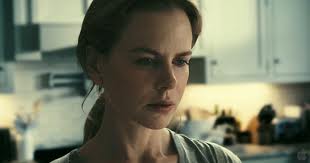
A couple struggles to come to terms with the loss of their four-year-old son in "Rabbit Hole", a film starring Nicole Kidman (as Becca) in a performance that deservedly earned her an Oscar nomination; and Aaron Eckhart (as Howie), who was unaccountably ignored by every award possible, in a  performance that I would champion as among the year's greatest.


With its wrenching and honest source material, wonderful supporting turns by Diane Wiest, Sandra Oh and the young actor Miles Teller, and sensitive and unobtrusive direction by John Cameron Mitchell (a real departure from "Shortbus"), this movie grabs viewers from the opening scene; I was absorbed until the final hopeful shot.

The film invites us to observe two normally loving, well-adjusted people as they attempt to cope with one of the most terrible losses one can imagine, often in isolation from those who can help the most.  Kidman's character flatly denies her feelings, and depends on rationalization; Eckhart's character prefers to remain in the past and relive it in old home videos; and Teller's character, who is deeply involed in the tragedy, fantasizes about parallel universes, and draws a comic book in which a happier life can be reached through a portal, or rabbit hole.


The film reveals the tragedy gradually, and honors the pace of its characters' healing, their relapses into grief,  their retreat to the sanctuary of memory or to the comfort of others, and their slow buildup to explosions of wounding anger that ultimately begin the healing process.


Among the many satisfactions of "Rabbit Hole", based on David Lindsey-Abair's Pulitzer-Prize-winning play,  is how well it translates to the screen.  I have not seen nor read the play, and it is a testament to the film's success that  I could not imagine it as a play. Lindsey-Abair also wrote the screenplay, and uses the grammar of film to reveal character and portray inner turmoil as only the intimacy of film can.


From the first scene, in Becca's newly-planted garden, the image of a severed blossom in her hand foreshadows the precariousness of her life.  Whether studying a character in isolation, or during a series of heated arguments, the camera is always at the right distance from its protagonists.  Except for a few cutaways to an enigmatic art project that is explained later in the story, the experience of "Rabbit Hole" is to dissolve the space between us and the screen: we forget that these are actors in a make-believe tragedy.

There is an almost biological naturalness to the rhythm and intensity of their eventual acceptance of their grief.  Not only do we identify with them on a deep and basic emotional level, but viewers have time to consider what losses they may have suffered in their lives (or those that will inevitably come) and reach a catharsis with these characters.

Nothing is forced...nothing is over-dramatized, as the situation is already fraught with drama.

The film wastes nothing.  In its relatively short running time, there are layers of backstories that involve us on their own, and deepen the central conflict.  


Becca and Howie need to heal at their own pace, separately in their own way, but by doing so risk their marriage.  A grief-therapy support group comforts him but infuriates her.  Becca's well-meaning mother (Wiest) reveals a son (Becca's brother) who died broken, of an overdose. Becca resents the comparison to her son's innocent accident, (running after the family dog when a car came a bit too fast), and must decide if she can derive strength from her mother's acceptance of a grief that never goes away. Becca's careless and carefree sister provides more reality than even Becca is willing to accept, turning away Becca's offer of the deceased son's clothing for her own soon-to be delivered child.

Howie, in the meantime, tries after eight months of mourning to find some semblance of domestic normalcy and affection from his wife, yet cannot stop watching videos of their son.  The family dog, too much of a reminder to them both, is staying with Becca's mother.  Howie angrily admits that he misses "him", meaning the dog but inside pining for his son. When he has nothing left, he turns to a member of the support group (Sandra Oh), whose husband is as resentful of therapy as Becca is.


Becca's grief manifests itself in a desire to confront the teen who was there at the accident scene.  These sequences provide some mystery and allow us to consider Becca's coming to terms with her unresolved maternal feelings through this young man (Tiller), a repentant and gentle fellow whose method of coping may help heal all of them.

I honestly did not recognize Kidman at first (she seems to have had some work done).  Beyond that, her embodiment of a grieving mother, and her slow realization that her son is gone for good and she must accept life without him, is flawless.  You might actually cheer for her during her questionable confrontation with a mother in a grocery store; and her body shows the resignation and despair as she dumps her son's clothing into a charity collection receptacle.  Her breakdown in a car near the film's finale is Kidman's crowning moment.


And is there a more under-appreciated actor than Aaron Eckhart? My sense is that he does not play the Hollywood game, is a workhorse with awesome talent, but goes unrecognized by the Hollywood promotion-mongers.  I could not take my eyes off of him whenever he was on the screen.  His characterization of Howie is tangible, likable, and charmingly flawed. Eckhart makes us understand this character through perfect readings of dialogue, his quiet expressiveness, his outbursts, even down to the way he dresses for a rendezvous. To me, Eckhart's Howie is the best-kept secret in movie acting this year, and is a sad omission from the Oscar roll call.


This movie is a nice companion piece to "Blue Valentine", a much edgier examination of a marriage in crisis.

"Rabbit Hole" succeeds in all departments and is a terrific adaptation of a play I must learn more about.  When it was over, my heart was broken, but I had a renewed sense of togetherness and life for these characters, who I had come to know for ninety minutes, in what I think is the most satisfying and accomplished little movie of the year.

Saturday, February 12, 2011

"The Trinity River Plays" and Chicago's Goodman Theater

I wish my readers could visit me in Chicago.  I would love to take you on an exploration of the neighborhoods and history, the beauty of the lakefront and the variety of cultural experience. To dine on great food served anywhere from sophisticated open-air courtyards to a real library with a working fireplace.  To ride the Chicago river and and marvel at the design and the architecture. To show it to you through my eyes, and to discover with you all that's unique, as I make it my mission this summer to take charge of this city.

Chicago is proud of its relatively new and vastly improved Theater District. Old movie palaces like the Oriental and the Chicago Theaters have become enormously popular venues for the latest live theatrical productions.

The Goodman Theater , a Tony-winning Regional Theater, has been a Chicago institution since 1925, when it was then the theater arm of the Art
Institute.  The founders of the theater, Erna and William Goodman, made a legacy of $250,000 to the Art Institute in honor of their son, Kenneth Sawyer Goodman, a playwright who died in the 1918 flu epidemic at age 35.

In its long and sometimes turbulent history, the Goodman encompassed both the theater and a the Goodman School of Drama, among whose graduates are artists such as Karl Malden, Sam Wanamaker, Geraldine Page, Shelley Berman, Harvey Korman, Jose Quintero, Linda Hunt, and Joe Mantegna.

The Drama School has since been acquired by DePaul University, and the Theater itself has been independent from the Art Institute since 1976, so that it can pursue independent fundraising.

Last week, I had the pleasure of making my first visit to the Goodman. Thanks to a Christmas surprise from Mark, we are now season subscribers.  Shockingly late, I admit, but an exciting moment, trying as I am to broaden a creative point of view for my benefit and that of my readers.

~ ~ ~ ~ ~ ~ ~ ~


I can't think of a better, more intimate environment for the production of "The Trinity River Plays", my maiden voyage to the Goodman Theater.

Playwright Regina Taylor wrote this trio of one-act plays (better described as an epic 3-act play) after losing her mother to cancer.

The play, however, is neither too solemn nor religious in the least.  It is lively and powerful, and it strives to find a spiritual center. The titles of the three plays (or acts), "Jar Fly", "Rain", and "Ghost Story", evoke the father, son and holy ghost of the trinity, and act as a motif to hold the stories together. The Trinity River is a mentioned but unseen place that surrounds the household of a group of black women who are the subject of the play. 

Iris, the central character, celebrates her 17th birthday in the first act. It is 1976, as Iris yearns to become a writer, sharing with us her essay on the locust, a creature that emerges every 17 years.  This segment introduces us the characters that are Iris' world: her doting aunt, her drug-addicted and charismatic cousin, her mother in mention only, the athletic boy she fancies, and her uncle, who perpetrates a crisis that Iris must come to terms with through the rest of the play. 


The next act finds Iris 17 years later, successful as an editor but failing in her marriage.Her mother occupies the stage in the beginning stages of terminal illness.  During this act there is a significant time change in which Iris must accept her mother's decline and seek her advice in dealing with the horrible secret that still haunts her. 

Act three occurs one year later.  It is the day of Iris' mother's funeral, and as Iris tries to make amends with her estranged husband, and resolve her conflicts with her aunt and cousin, her mother re-appears in ghostly fashion, and Iris joins her in the family garden to seek advice and love, and finally let go.

The play is helped in a big way by the elaborate and welcoming stage setting, a simple house with large kitchen and patio and garden with a big tree and real rain, and a stunning painted backdrop of clouds over all of it.  I was drawn in by this setting, felt that I could move around and occupy it. With its garish 1970's decor, rooms and doors at various depths and levels, and excellent lighting conveying a natural feeling of sunlight and moonlight, the set was as much a participant in the action as the actors.


Each performer meets the demands of his/her roles beautifully, bringing much-welcomed humor and intensity to the cries of pain and words of healing in Taylor's dialogue.  Karen Aldridge's Iris must carry the entire show, and is convincing through her various stages of life and attractiveness.  At the end of Act Two, when she unleashes a primal howl at the memory of her abuse, she chills the house. Christina Clark deserves special praise as the cousin, a role that needs a brashness of tone and an ingratiating physicality which she pulls off beautifully as she steals the show.  As the aunt, Penny Johnson Jerald provides warmth and humor in a role that in some odd way reminded me of that of the mother in "Precious", ignoring the signs of trouble that explode later.  Samuel Ray Gates, Jefferson A. Russell, and Jacqueline Williams round out a talented cast.

The show might have benefited from tighter editing; it goes on about 20 minutes longer than needed. The middle of the Second act, and portions of Act three involving a basketball challenge between the two men, offer little insight or emotional impact.

On the other hand, The Goodman should be proud to have offered this original and unforgettable experience.  And oh, that set...